Plans change after dark
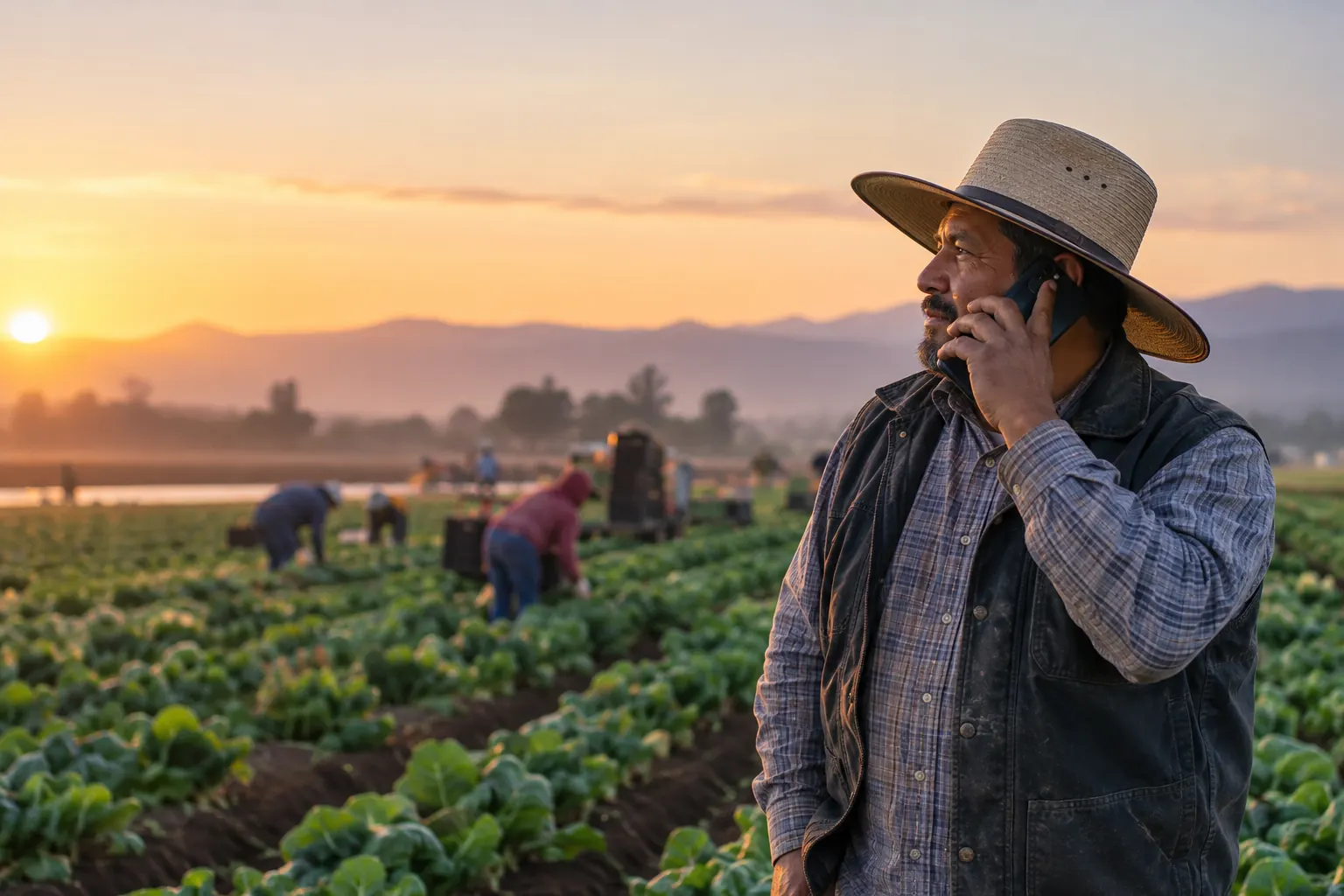
Rain, heat or a broken harvester can move tomorrow's start time. If only the crew leader speaks Spanish, every change waits on him, and a few workers still show up at the wrong block.
Start times move with the weather, and the crew needs to know tonight, not at the field gate. intelecho lets a farm labor contractor, grower or office manager call a farmworker's phone and talk through a live translated call: you speak English, they hear Spanish, and their answer comes back in English. Use it for schedule changes, pay questions and housing issues with H-2A workers and local crews alike.
H-2A positions certified in fiscal year 2024
Source: USDA Economic Research Service, Farm LaborHired crop workers (not counting H-2A) who said they can't speak English at all, 2021-2022
Source: U.S. Department of Labor, NAWS Research Report 17Hired crop workers employed by farm labor contractors rather than growers, 2021-2022
Source: U.S. Department of Labor, NAWS Research Report 17Rain, heat or a broken harvester can move tomorrow's start time. If only the crew leader speaks Spanish, every change waits on him, and a few workers still show up at the wrong block.
A missing hour on a pay stub or a new piece rate gets explained secondhand. Small misunderstandings grow into distrust when nobody hears it straight from the office.
A broken stove in employer housing or a bus that keeps running late gets mentioned to a friend, not to you. Workers who don't speak English often never call the office at all.
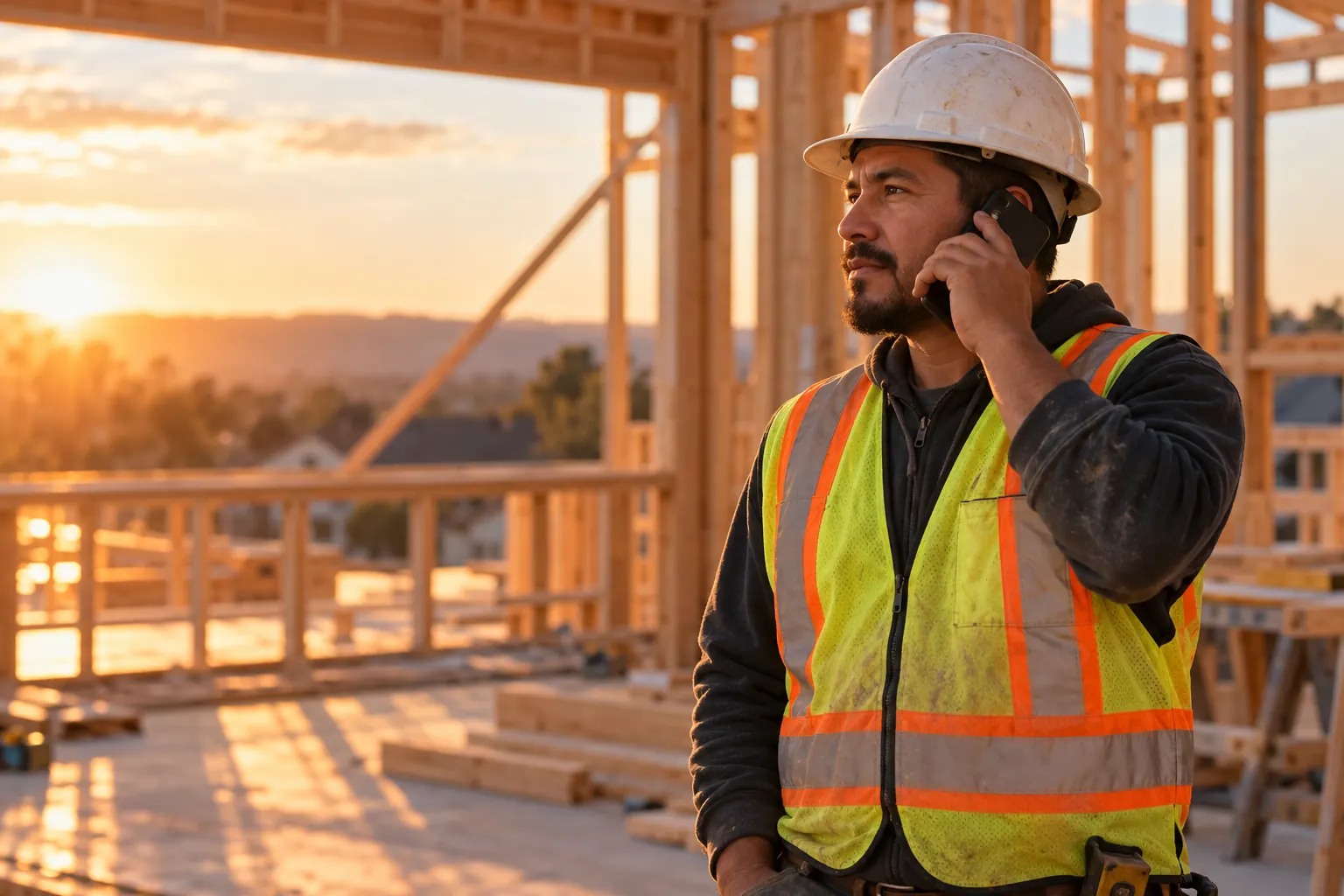
A contractor calls workers the night before to say picking starts at 5:30 a.m. because of afternoon heat, which block to report to, and where the bus will stop.
The payroll clerk calls an H-2A worker who asked about a deduction, walks through his hours and piece-rate totals, and confirms the date of the next check.
The housing coordinator calls a worker who reported no hot water, confirms which unit and bathroom, and says the plumber is coming Tuesday morning.
A grower calls last season's local crew members (the ones with U.S. numbers) in late winter to ask who is coming back for the spring harvest and when they can start.
Each person speaks naturally in their own language. intelecho translates every turn so each side hears the other in a clear AI voice.
Spanish covers most crews: 57% of hired crop workers said it is the language they are most comfortable speaking (DOL NAWS 2021-2022). The others reflect smaller farm communities, such as Haitian crews on the East Coast and Punjabi-speaking growers and workers in California's Central Valley.
At hiring or orientation, write down each worker's phone number and the language they want for calls. Ask directly instead of assuming Spanish.
Enter your number, the worker's number and both languages on the website. intelecho calls you, then rings the worker, who hears a short introduction in Spanish saying this is a translated call from you.
Say the time, the place and what to bring, then ask the worker to repeat it back. Each call is one worker for up to five minutes, so keep it short and move down the list.
No. intelecho only connects U.S. and Canadian numbers on both sides. Once H-2A workers have a U.S. phone number here, you can call them, but you can't reach phones in Mexico, Guatemala or other countries.
No. intelecho calls their regular phone number, so a basic flip phone works fine. You start the call from the website on your own phone or computer.
Not yet. Indigenous languages of the Americas aren't supported, and many farmworkers from Oaxaca, Guerrero and Guatemala speak them as a first language. For those workers, use a bilingual crew member they trust or a professional Indigenous-language interpreter.
No. Each call is one-to-one between you and one worker, and free calls end after five minutes. For crew-wide messages like safety talks, speak in person with a trained bilingual trainer.
Nothing right now, because intelecho is a free demo. Up to three calls can run at once across the whole service, so at busy times you may need to try again. If you need longer calls or regular use across a large crew, contact us.
Enter your number and theirs, pick both languages, and pick up when we ring you. It takes about a minute to set up.