One bilingual foreman, every question
When a single person is the only bridge to the crew, every question waits on their phone. If they're out sick or on another site, the schedule stalls.
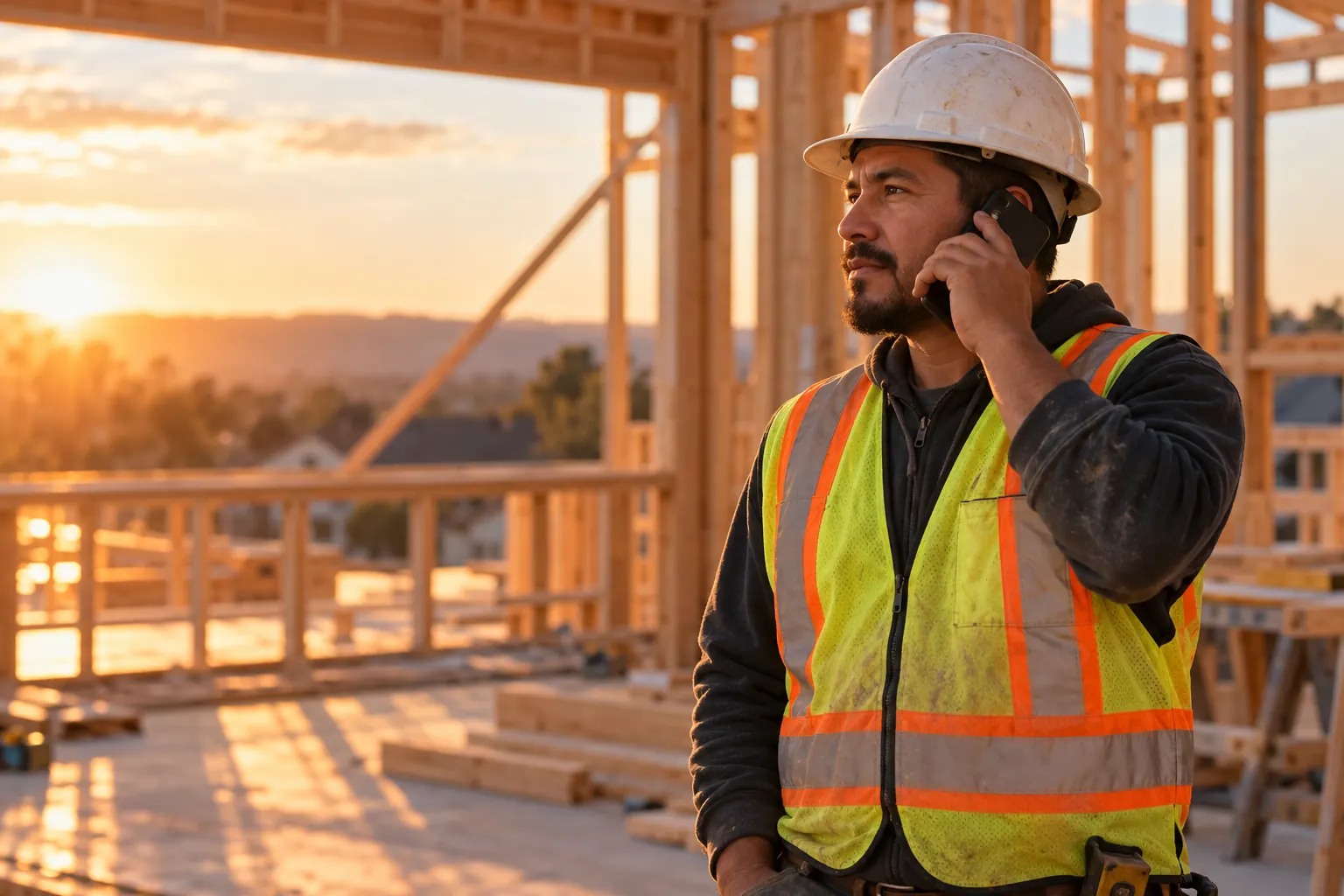
On a lot of job sites, the person who knows exactly where the framing stands is a crew lead who's more at home in Spanish. intelecho turns an ordinary phone call into a two-way translated conversation, so a GC or super can sort out schedules, materials and inspections without waiting on the one bilingual foreman. Think of it as construction Spanish on demand, with Portuguese, Polish and Russian too.
of U.S. construction laborers are Hispanic or Latino
Source: U.S. Bureau of Labor Statistics, Current Population Survey, 2025 annual averagesconstruction and extraction workers killed by work injuries in 2024
Source: U.S. Bureau of Labor Statistics, Census of Fatal Occupational Injuries, 2024of the 1,229 Hispanic or Latino workers killed on the job in 2024 were born outside the U.S.
Source: U.S. Bureau of Labor Statistics, Census of Fatal Occupational Injuries, 2024When a single person is the only bridge to the crew, every question waits on their phone. If they're out sick or on another site, the schedule stalls.
The wrong tile layout, drywall hung before the framing inspection, a delivery dropped at the wrong lot. A short call that both sides actually understand saves a lot of tear-out.
The forecast shifts at 7 p.m. and tomorrow's pour has to move. A late-night text in broken Spanish rarely gets you a clear yes.
Call the flatwork lead the night before: rain is coming, the pour moves from Tuesday to Thursday at 6 a.m., and the pump truck is rebooked. Confirm how many workers they'll bring.
Before the crew starts, go over which rooms get moisture-resistant board, where the access panels go, and that nothing gets hung until the framing inspection passes.
Ask the roofing lead how many squares of shingles are left, whether the drip edge arrived, and what they need on site by Friday to stay on schedule.
After a near miss with an unsecured ladder, call the crew lead to hear what happened and set a time for an on-site toolbox talk led by a qualified bilingual trainer.
Each person speaks naturally in their own language. intelecho translates every turn so each side hears the other in a clear AI voice.
Among foreign-born construction workers, about 86% speak Spanish at home, followed by Portuguese (1.8%), Polish (1.5%) and Russian (1.1%), according to CPWR's Construction Chart Book (6th ed., 2015 ACS data). Some Guatemalan workers speak K'iche', Mam or other Mayan languages, which intelecho does not support yet.
Pick English for yourself and Spanish, Portuguese or Polish for them. Add your name and company so the introduction tells them who's calling.
intelecho calls you first, then rings them. Step away from saws, compressors and traffic before you start talking, because background noise hurts the translation on both ends.
Settle the date, the quantity or the change order. Then text a short written summary or update whatever schedule your team already uses.
Use it for scheduling, scope and logistics, not for safety-critical instructions. Safety training, hazard communication and emergency procedures should come from a qualified bilingual trainer, backed by written materials in the worker's language. In an emergency, call 911.
It works on any phone, but loud equipment makes translation less reliable. Step away from saws, generators and traffic, and ask the other person to do the same. Short sentences with pauses work best.
It's a different tool. Learning some construction Spanish builds trust with your crew, and intelecho covers the conversations that go beyond what you know. Many supers end up using both.
Yes. intelecho supports Brazilian and European Portuguese, Polish, Russian, Ukrainian, Albanian and Spanish, among 46 languages. Mayan languages like K'iche' and Mam are not supported yet.
No. intelecho calls any U.S. or Canadian phone number, including basic flip phones. There's nothing to install on either end, and you start the call from the website.
Enter your number and theirs, pick both languages, and pick up when we ring you. It takes about a minute to set up.